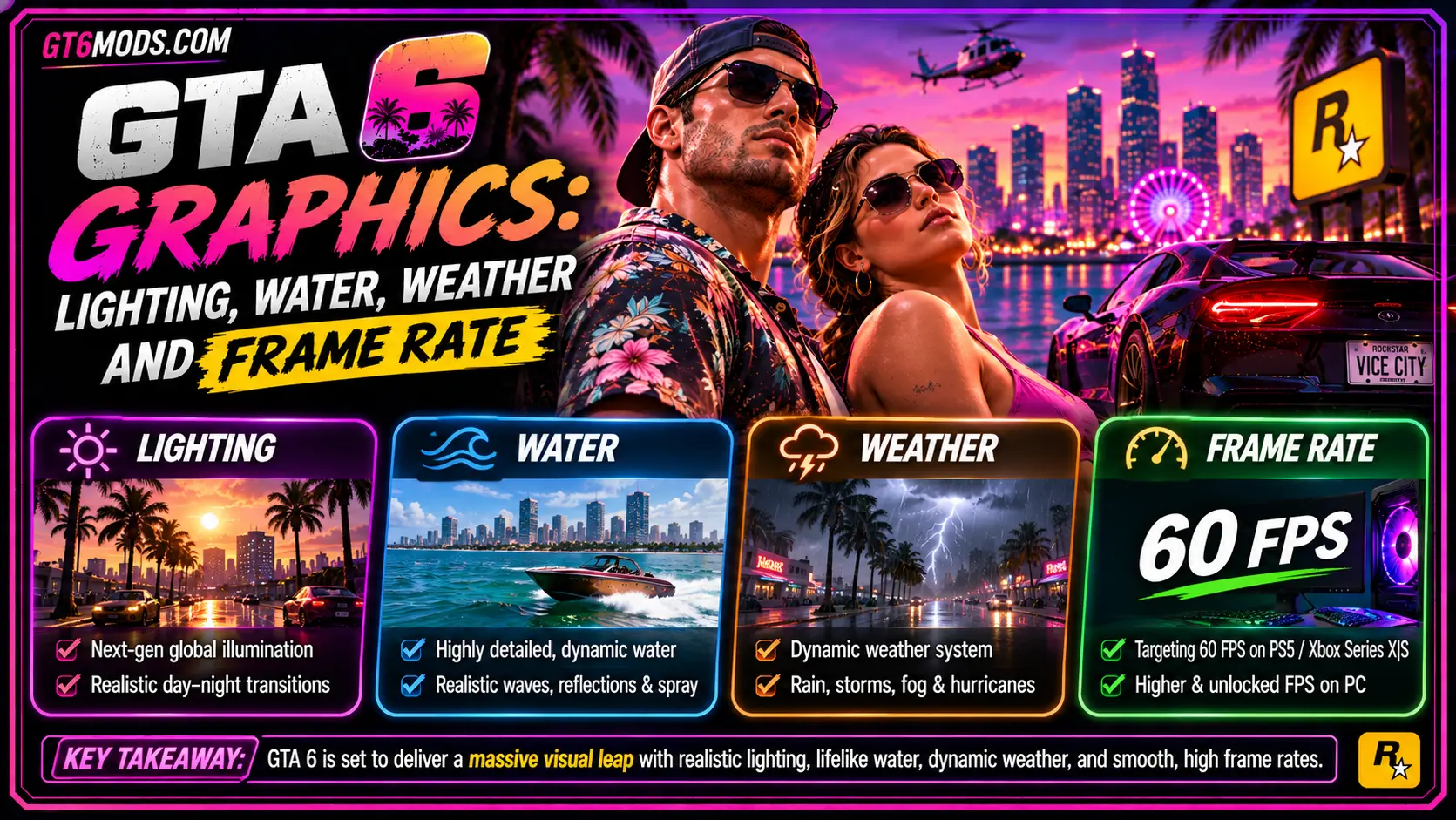
GTA 6 Graphics: Lighting, Water, Weather and Frame Rate
GTA 6 graphics are the subject of a lot of loud claims, so it helps to sort them by source. Rockstar executives have now explained the weather, wind and water systems in detail. The ray tracing, resolution and frame rate details mostly come from analysts and reports, not from a Rockstar spec sheet.
This guide separates those layers. We’ll cover what Rockstar’s own people have said, what outside experts have measured from the footage, and what remains unconfirmed. “Ultra-realistic” is a nice phrase, but we’ll stick to what can be backed up.
The short version
| Topic | What we know | Source type |
|---|---|---|
| Weather | Clouds move independently and respond to wind, humidity, fog, time of day and season | Rockstar executives, in Edge |
| Wind and water | Wind shapes waves, and islands and buildings can shelter water | Rockstar executives, in Edge |
| Storms | Can damage aircraft lightly and send NPCs to shelter | Rockstar executives, in Edge |
| Ray tracing | Analysts spotted ray-traced reflections and global illumination | Outside analysis |
| Frame rate | Reportedly 30fps at launch, with no 60fps mode decided | Reports of an interview |
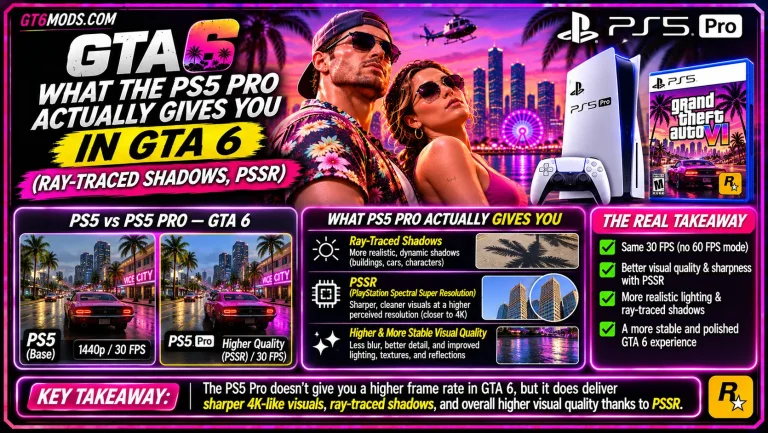
| Resolution | Estimated near 1440p, upscaled to 4K on PS5 | Outside analysis |
| Water physics budget or team size | Unverified leak | Anonymous |
Weather: the best-documented part
Edge magazine’s issue 430 cover story is the most detailed source. Edge visited Rockstar North in Edinburgh and spoke with co-heads Aaron Garbut and Rob Nelson, and Nelson played the current build for 90 minutes without a script. GamesRadar’s report on the weather section covers the highlights.
Garbut contrasted the new system with GTA V, where the weather generally came down to sunny, rainy or overcast presets. He described the new one as much more granular. In practice, that means:
- Independent clouds. Cloud systems move on their own and are shaped by wind, humidity, fog, time of day and season.
- Local conditions. You can stand in sunshine while a storm builds in the distance, and different parts of Leonida can have different weather at once.
- Reactions. Pedestrians seek shelter as conditions worsen.
Rockstar’s Owen Shepherd, vice president of art for lighting and rendering, added more detail in remarks reported by Forbes. He said the team re-engineered the system to be more localized and persistent. Storms are described as having heavy cloud, strong wind, rain that leaves water running off roofs and lampposts, and lightning that lights up the clouds. Rainbows can appear under the right lighting, and recently soaked areas stay wet with puddles after the storm passes.
Wind: the quiet star
Wind seems to be the most technically interesting piece. According to the Edge coverage, wind moves trees, clouds and waves. Buildings and islands can block and redirect it, which changes how air moves through a city. Shepherd also mentioned offshore breezes after sunset and warm air rising during the day, plus details like debris swirling on rooftops and swamp grass bending.
These aren’t cosmetic. They link the weather to what you do, which is where Rockstar’s games usually try to stand out.
Water: waves, boats and shelter
The water details come from the same interview. Wind-driven waves behave differently depending on where you are. Islands and buildings can shelter parts of a bay, so a boat in a protected area gets a calmer ride than one in open water. Garbut said that where you are in your boat affects whether you skip over the waves or get thrown around by them.
That fits what Rockstar has shown elsewhere. Trailers feature boats moving through channels, jet skiing is confirmed, and scuba diving and snorkeling are both on the activity list. We cover those in our guide to essential activities in Vice City.
The water physics leak
You may have seen claims that Rockstar has 20 engineers on water physics and spent $200 million to $300 million on it, or that the game includes surfing, hurricanes and floods. Those come from an anonymous social media post that Notebookcheck reported as a leak in 2025. Nobody has verified the team size or the budget. Hurricanes and tropical storms are mentioned in some reporting on the weather system, but we haven’t seen Rockstar confirm surfing or flood mechanics, so we treat those as unconfirmed.
Storms and vehicles
Weather also affects what you drive and fly. Severe conditions can cause turbulence for planes and helicopters, and flying through a storm for too long can cause light damage. Boats are affected by wind and waves. For players, that means weather becomes a risk to plan around, not just a backdrop.
Lighting and ray tracing
Rockstar hasn’t published a full list of graphics features. What we have comes from analysts studying the footage. Digital Foundry’s analysis, as summarized by Notebookcheck, reportedly identified ray-traced reflections and ray-traced global illumination in Rockstar’s PS5 footage. That’s consistent with the glossy reflections on water, glass and wet surfaces visible in trailers, and with the neon-heavy look of Vice City at night.
Treat that as an informed outside reading, not an official specification. It’s also worth knowing that trailers are edited, as we discuss in our piece on the launch trailer downgrade debate.
Resolution and frame rate
Here’s where the evidence is thinner. Digital Foundry’s footage analysis, again via Notebookcheck, estimates the game renders near 1440p on PS5 and upscales to 4K at 30fps. Reports from late August, citing an interview with Rob Nelson, say GTA 6 targets 30fps and that Rockstar hasn’t decided whether to add a 60fps performance mode. A resolution on Xbox hasn’t been announced, and we haven’t seen footage labeled as captured on Xbox.
A few points to keep in mind:
- 30fps is a target, not a verdict. Plenty of acclaimed open-world games run at 30fps.
- Simulation drives the cost. Analysts point to NPCs, traffic, physics and streaming as the real ceiling, not just graphics. Our look at GTA 6’s 600,000 NPC animations shows how much is going on in the background.
- A performance mode isn’t ruled out. Rockstar hasn’t confirmed one, but it hasn’t excluded one either.
Terms you’ll see in graphics coverage
- Ray tracing: simulating light bouncing to create realistic reflections and shadows.
- Global illumination: how light bounces around a scene, so rooms and streets look naturally lit.
- Volumetric clouds or atmospherics: clouds and fog drawn as real volumes, not flat images.
- Upscaling: rendering at a lower resolution and enlarging it, for example 1440p to 4K.
- Frame rate or fps: how many images the game draws each second.
- Persistent weather effects: puddles and wetness that remain after rain stops.
How GTA 6 compares with its predecessors
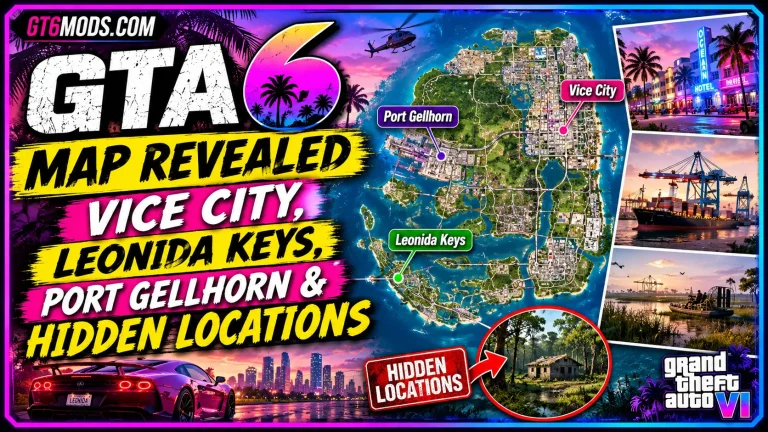
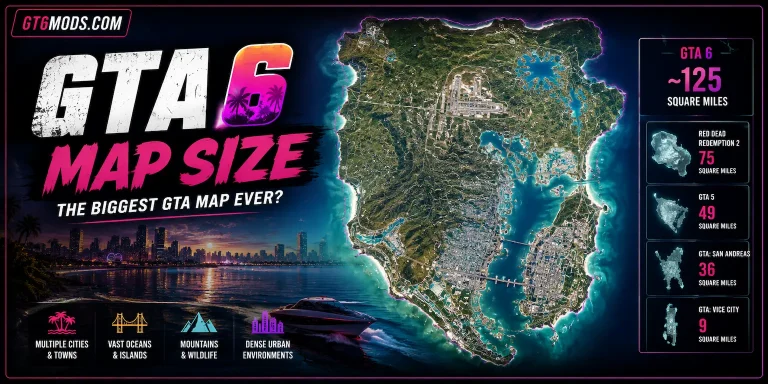
With the weather system as the clearest evidence, the jump from GTA V looks large. Presets have given way to a simulation where wind, humidity and season interact. Edge also reports that the map is nearly as large as those of GTA 4, GTA 5 and Red Dead Redemption 2 combined, which makes a dynamic system more demanding to run. Our map guide covers the confirmed regions.
Comparisons with Red Dead Redemption 2 are harder. Rockstar hasn’t published anything that lets us measure the two directly, and we’d rather not claim it looks better until players can judge.
What’s still unconfirmed
- The final resolution and frame rate on each console.
- Whether a 60fps mode will arrive at launch or later.
- The complete ray tracing feature list.
- Surfing, floods and other water features.
- Performance on Xbox Series S.
What to watch next
Reviews are rumored to land on November 18, and technical analyses typically follow within days of launch. Those will be the first fair tests of Rockstar’s weather and water claims. We’ll update this page when real data arrives.
The bottom line
The strongest evidence for GTA 6 graphics is in the weather: independent clouds, wind that moves waves and trees, storms that affect aircraft and a city that reacts. Ray tracing and resolution are informed estimates, and frame rate details are reported but not formally confirmed. Treat the “most realistic ever” headlines with caution, and judge the visuals when you play on November 19.